Teenage Dirtbag A Dad Hats Slumber Party
A fully loaded '90s sleepover, played completely straight. Pizza rolls, scary stories, prank calls, spin the bottle, pillow fights, dumb dares, contraband missions, and a Monopoly meltdown. Late-night kid logic, run by a room of grown adults who are way too old for this and fully committed anyway.
Who We Are
Older dudes playing young, fully committed. This is our world, not a pastel sleepover.
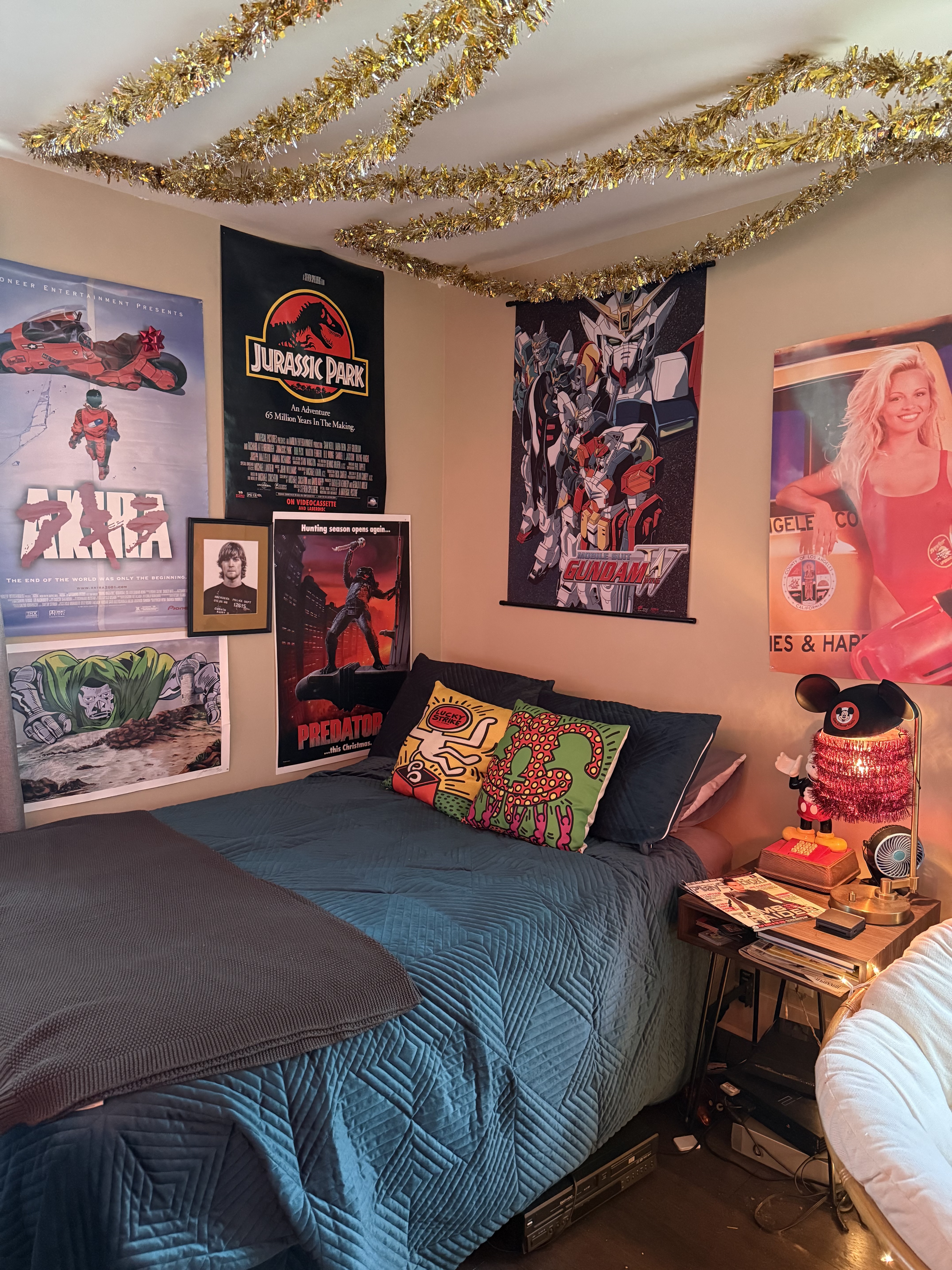
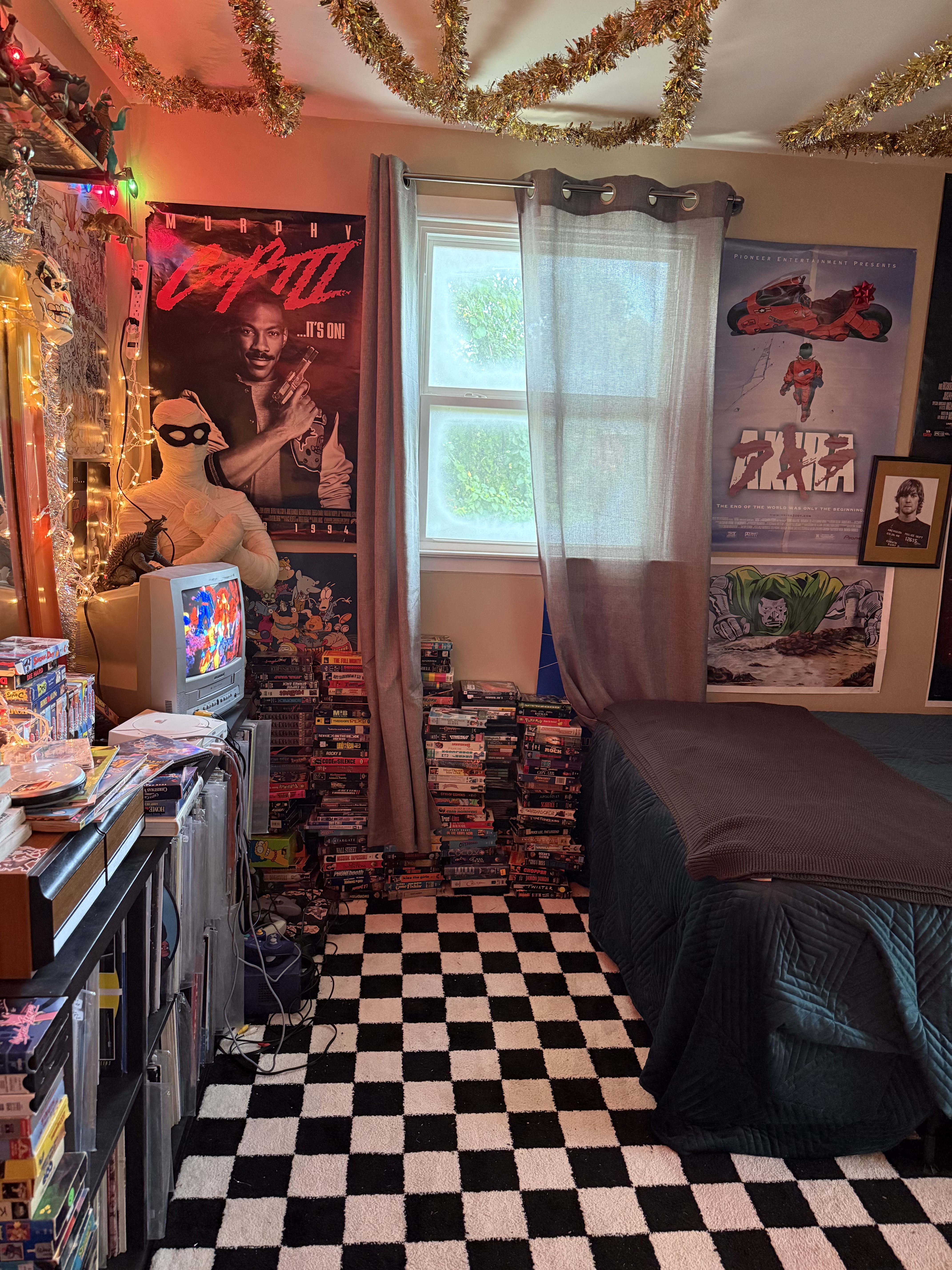
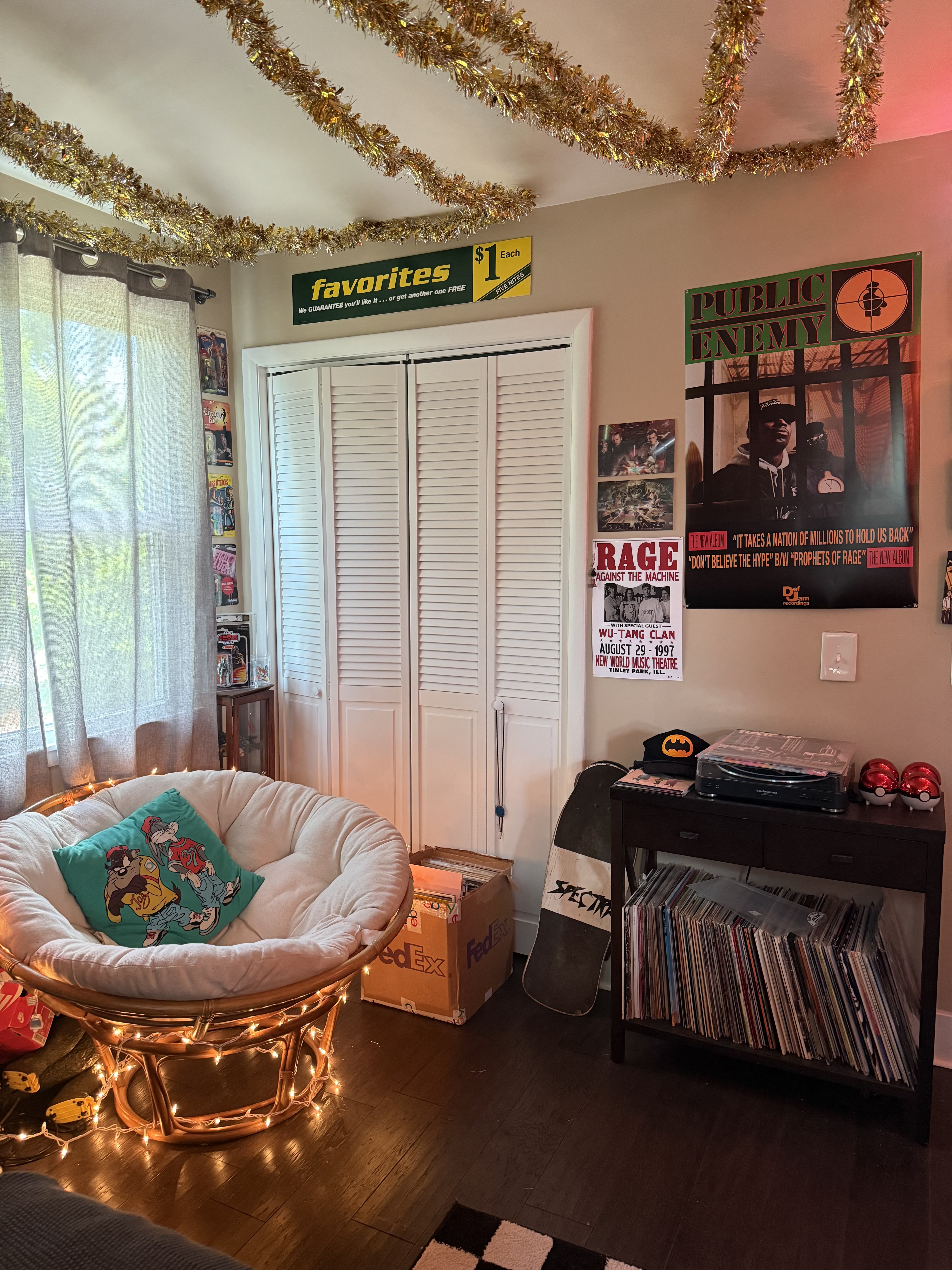
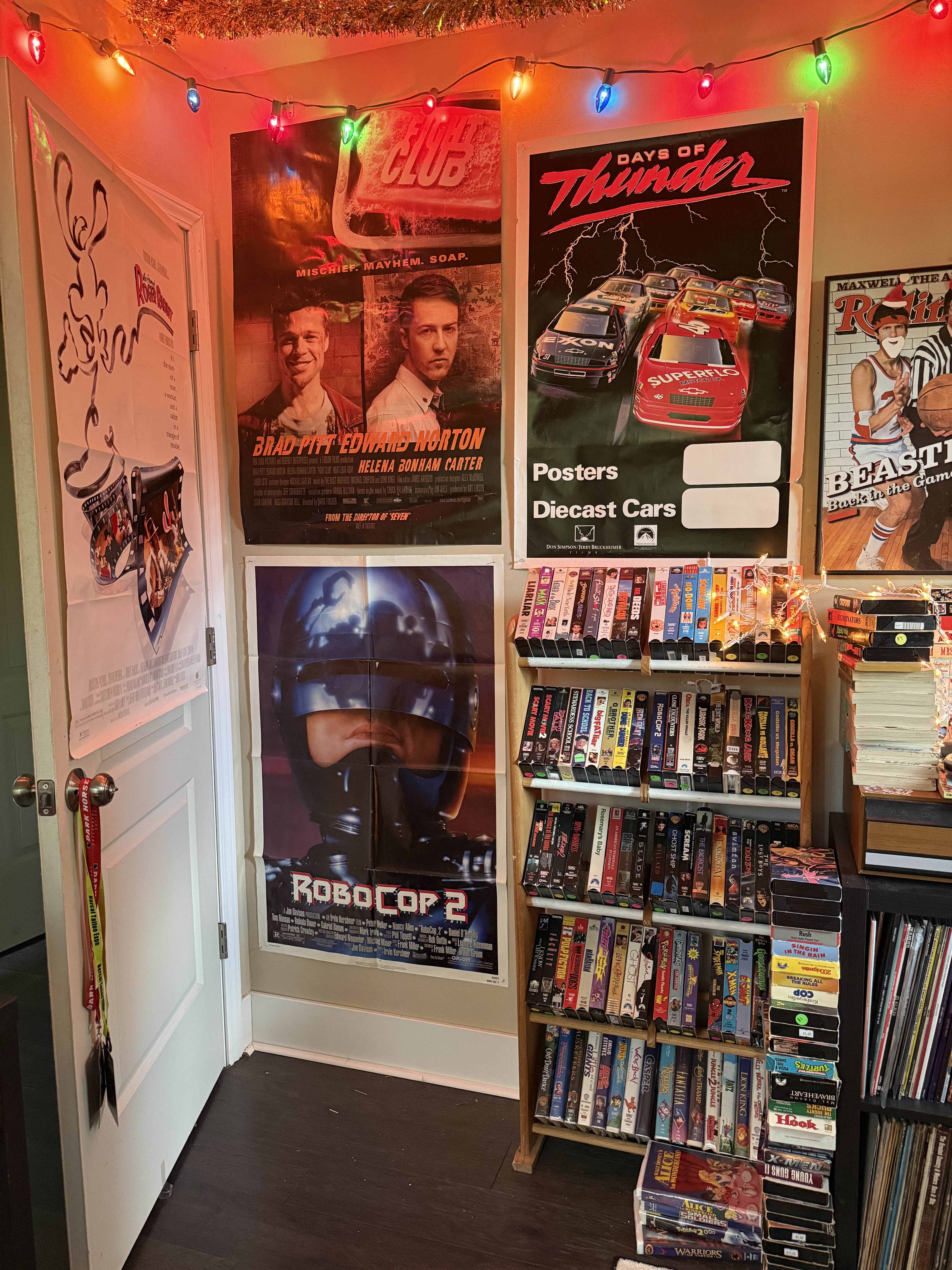
We're cult-film and VHS lifers. Akira, Predator, Fight Club, RoboCop 2, Bad Boys II, Public Enemy, Rage, Beastie Boys, a mummy statue, checkerboard floors, gold tinsel, colored Christmas lights, walls of tapes and vinyl. The sleepover happens inside that world, because these are our actual rooms.
Earnest, never winking. We commit to the bit with zero irony. The comedy is the gap between a room of grown adults and the sincerity of a 12-year-old's sleepover. Nobody mugs at the camera.
DIY, sweaty, a little gross. Pop-punk energy, not twee nostalgia. Snack-wrapper clutter, real basements, harsh flash, things knocked over. Build to anarchy, then everyone crashes.
"Does she like me?" "Will Dad Hats ever be cool?" asked to a Ouija board, completely serious.
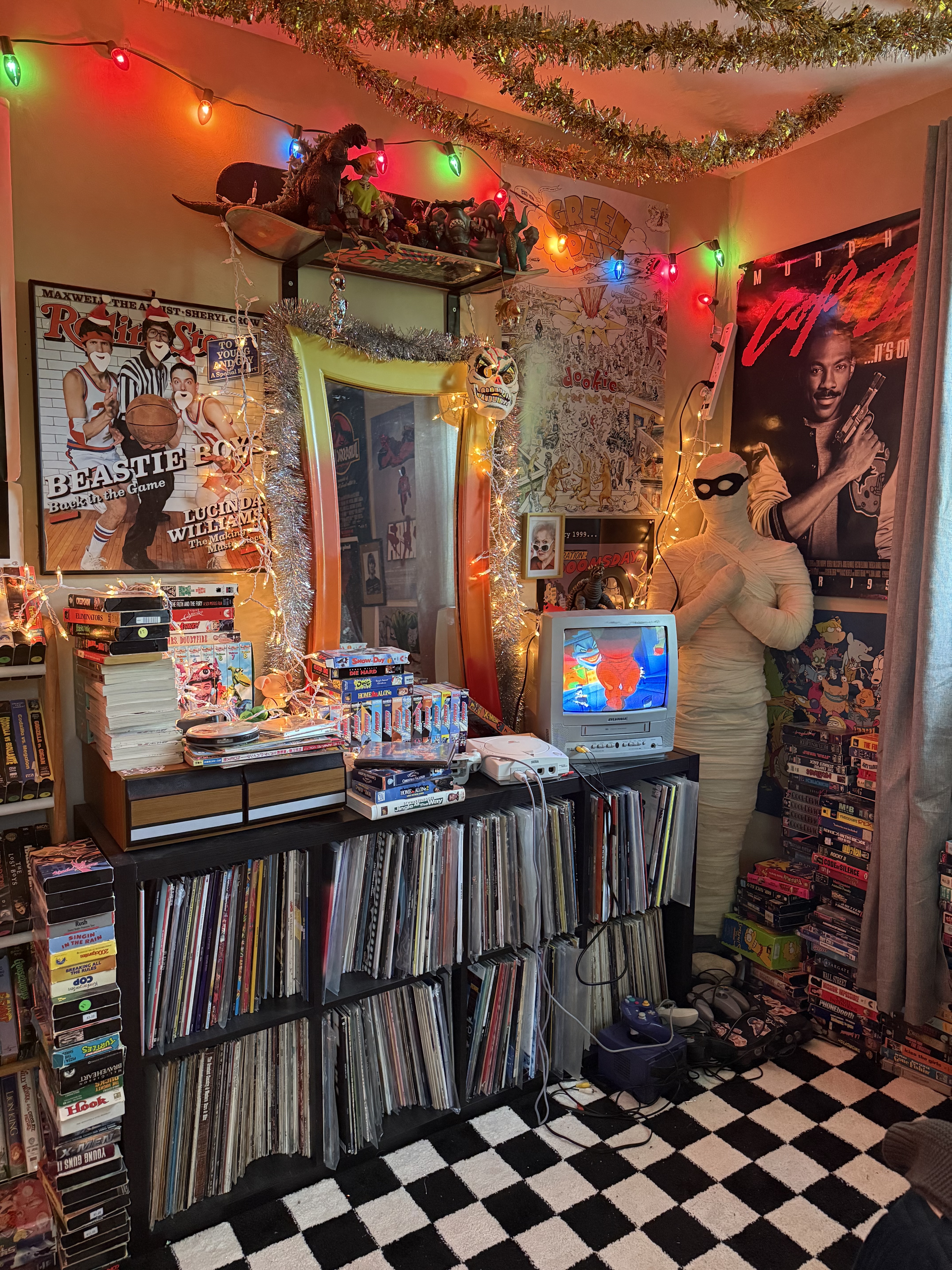
Our Set, Hayden's '90s Room
The actual hero room. Real photos. This is the look everything else matches.
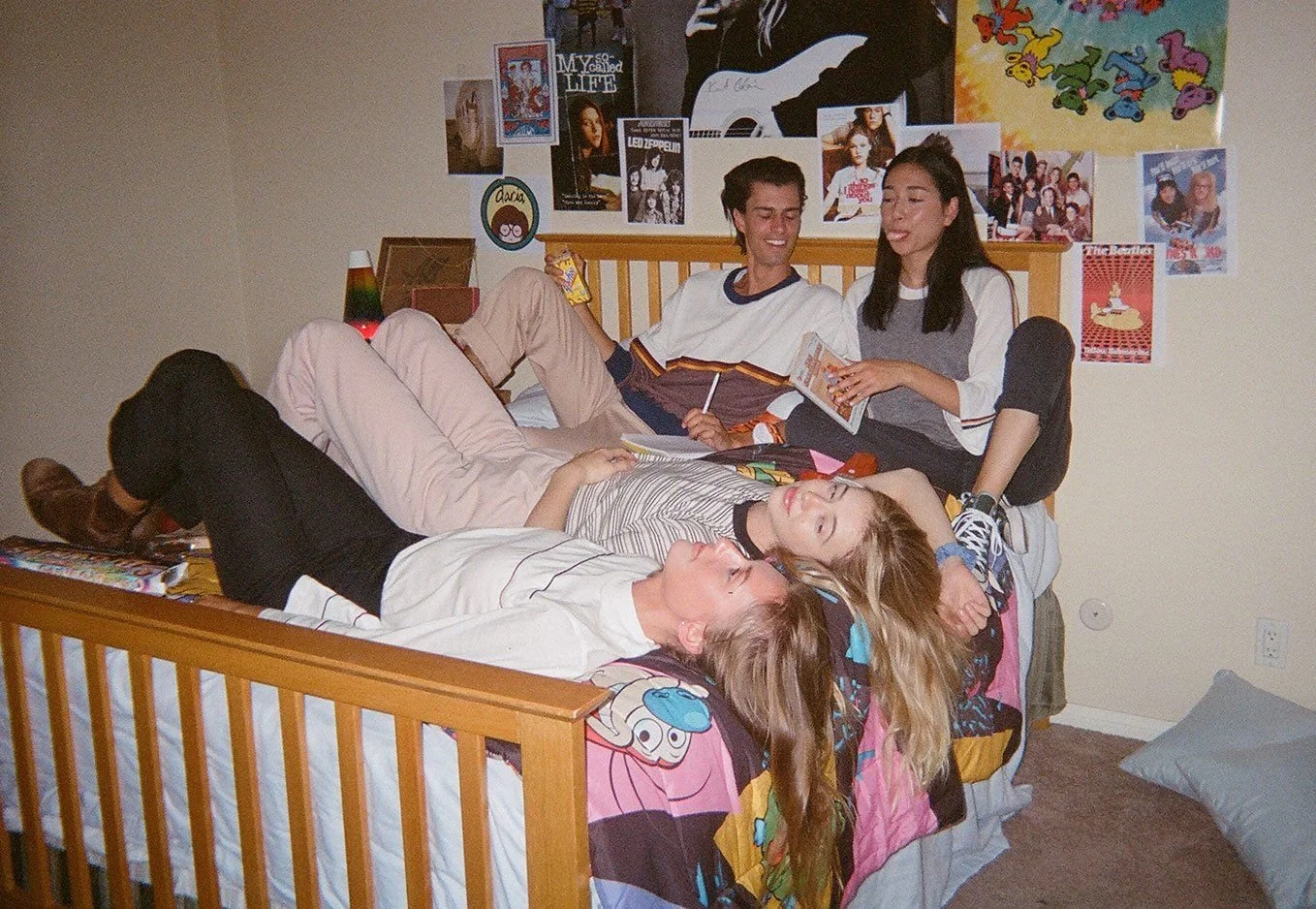
This is the strongest asset we have. The room already is the mood board: poster walls, VHS towers, checkerboard floor, vinyl crates, CRT and console, papasan in string lights, gold tinsel on the ceiling. Note the Baywatch poster in the first shot. That's our dream-sequence singer, already on the wall (see section 07).
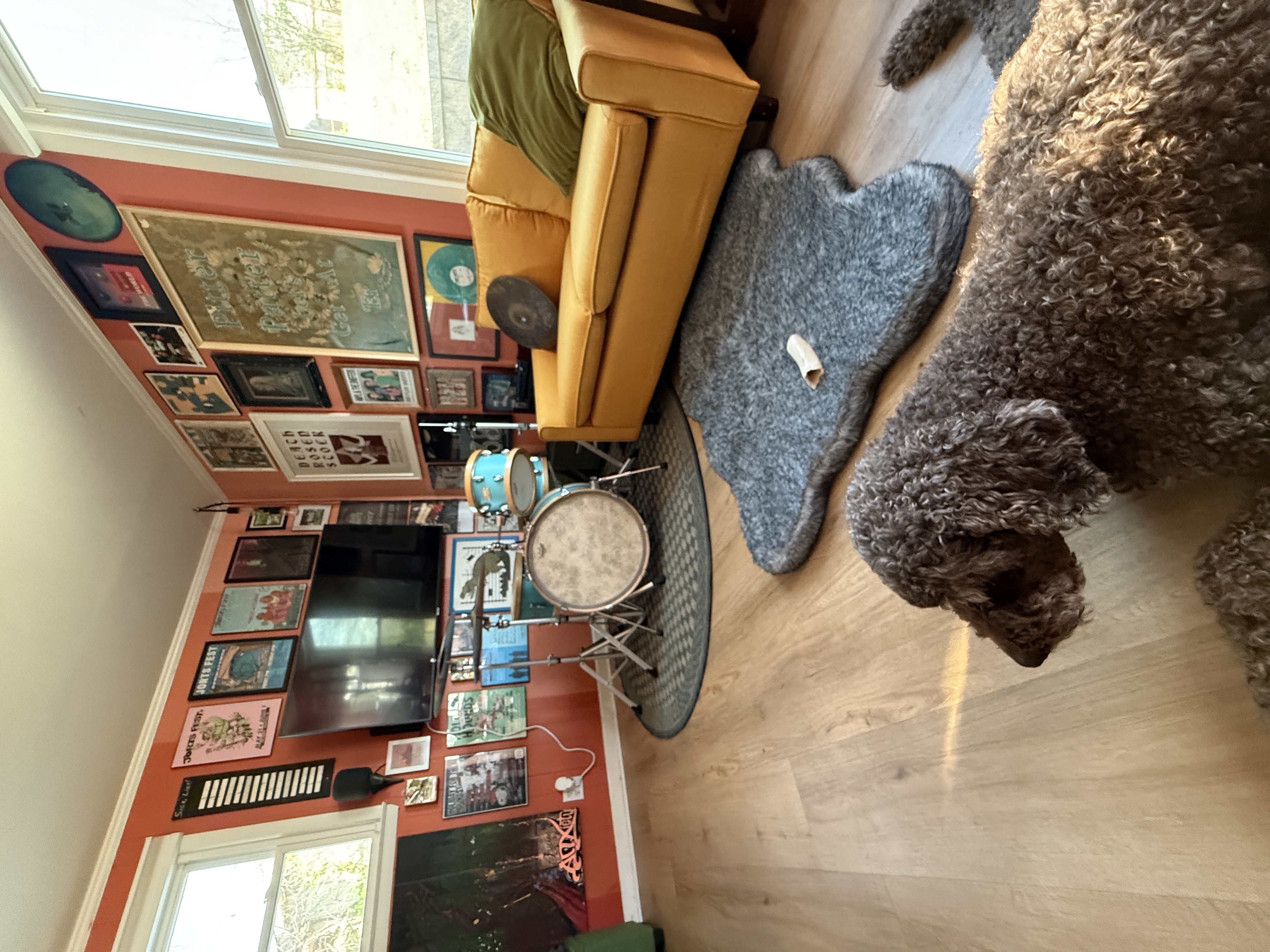
Joe's Office, the Gear Heist
Plot twist: we don't play here, we rob the place. The office is where the gear lives. The band breaks in to "borrow" the instruments, heist-style, then hauls everything to the basement to actually play. Bright "Buzz's room" walls, posters wall to wall, a kit and extra gear staged for the fun of it.
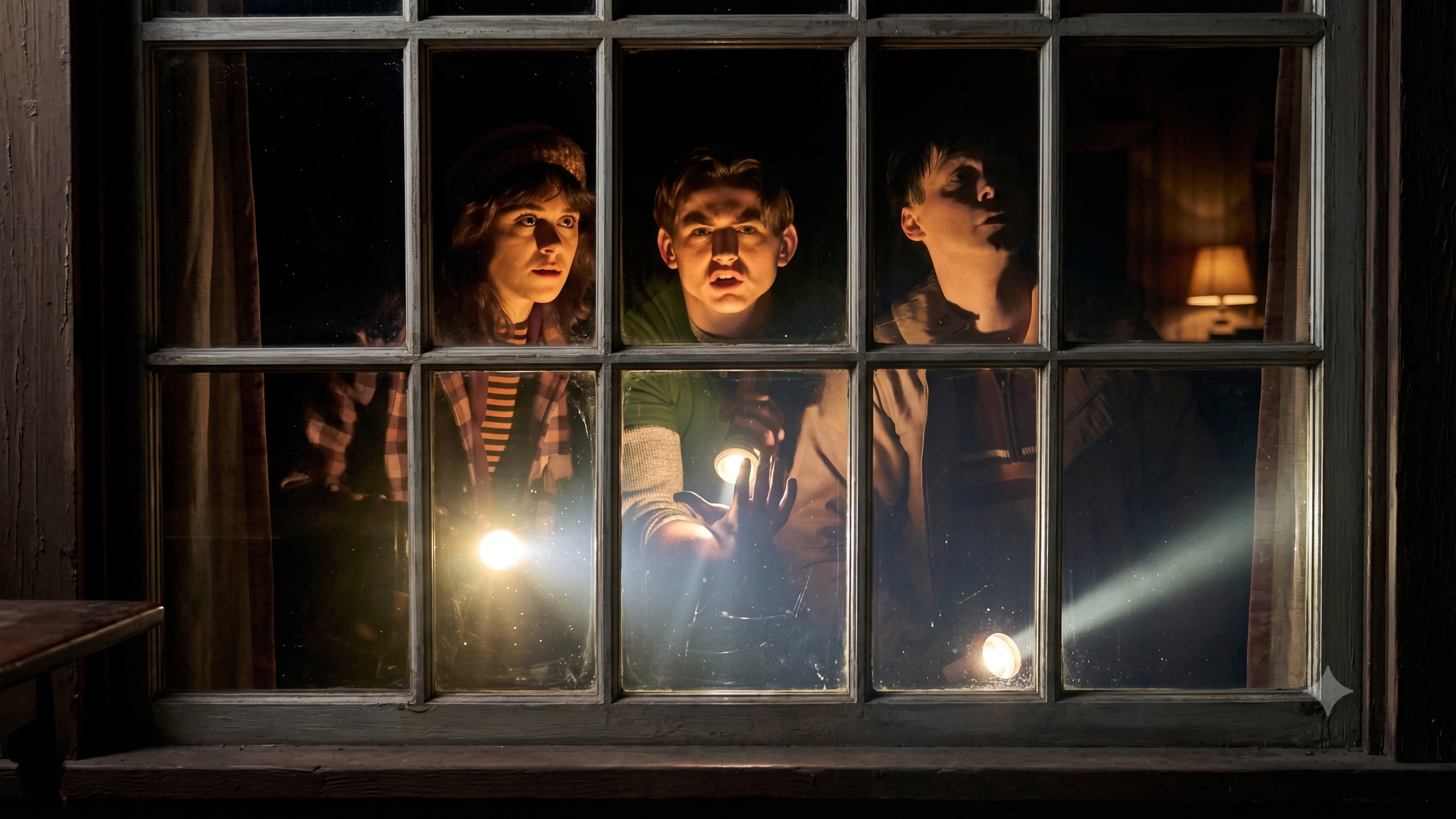
Beat sequence: 1. boys sneaking around the house. 2. flashlight beams cutting through the office window from outside. 3. eyeballing the gear (stage more than the drums, the more to grab the better). 4. climbing in through the window. 5. climbing back out with the loot. 6. quick scramble setup in the basement, straight into the full-band tight shots.
Shoot it dark for the break-in even though this ref is daylight. Wardrobe is low-stakes, black hoodies if anything, played dead straight like a real heist. Photo's a loose phone snap, use it to block the gear and the windows. There's a flashlights-at-the-window reference down in Reference Vibes that nails the tone.
Main Locations
Five spaces, each carrying a different energy.
Hayden's '90s Room
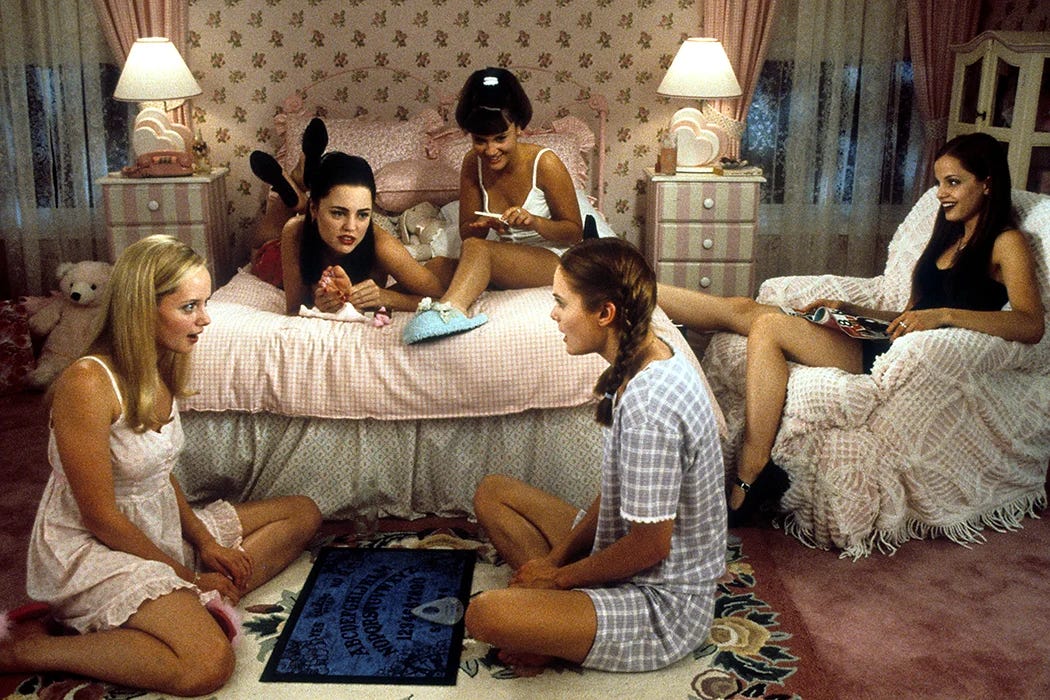
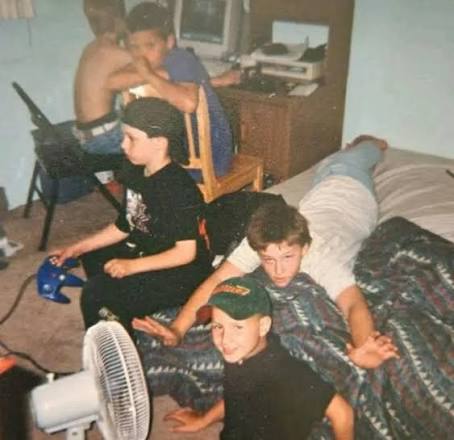
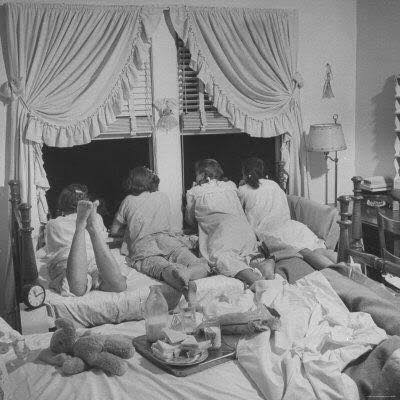
Hero nostalgia: movies on TV, magazines, Ouija, prank calls, nail painting, scary stories, the big-bed ending.
Hayden's Basement
True basement energy: laundry, clutter, knick-knacks. No extras, so performance is tight push-ins on people playing instruments. Pushup contest, Monopoly flip, pillow fight.
Joe's Office
The gear room. Boys break in through the window to grab the instruments, heist-style, then haul them to the basement. Stage more than drums for the fun of it.
Living Room
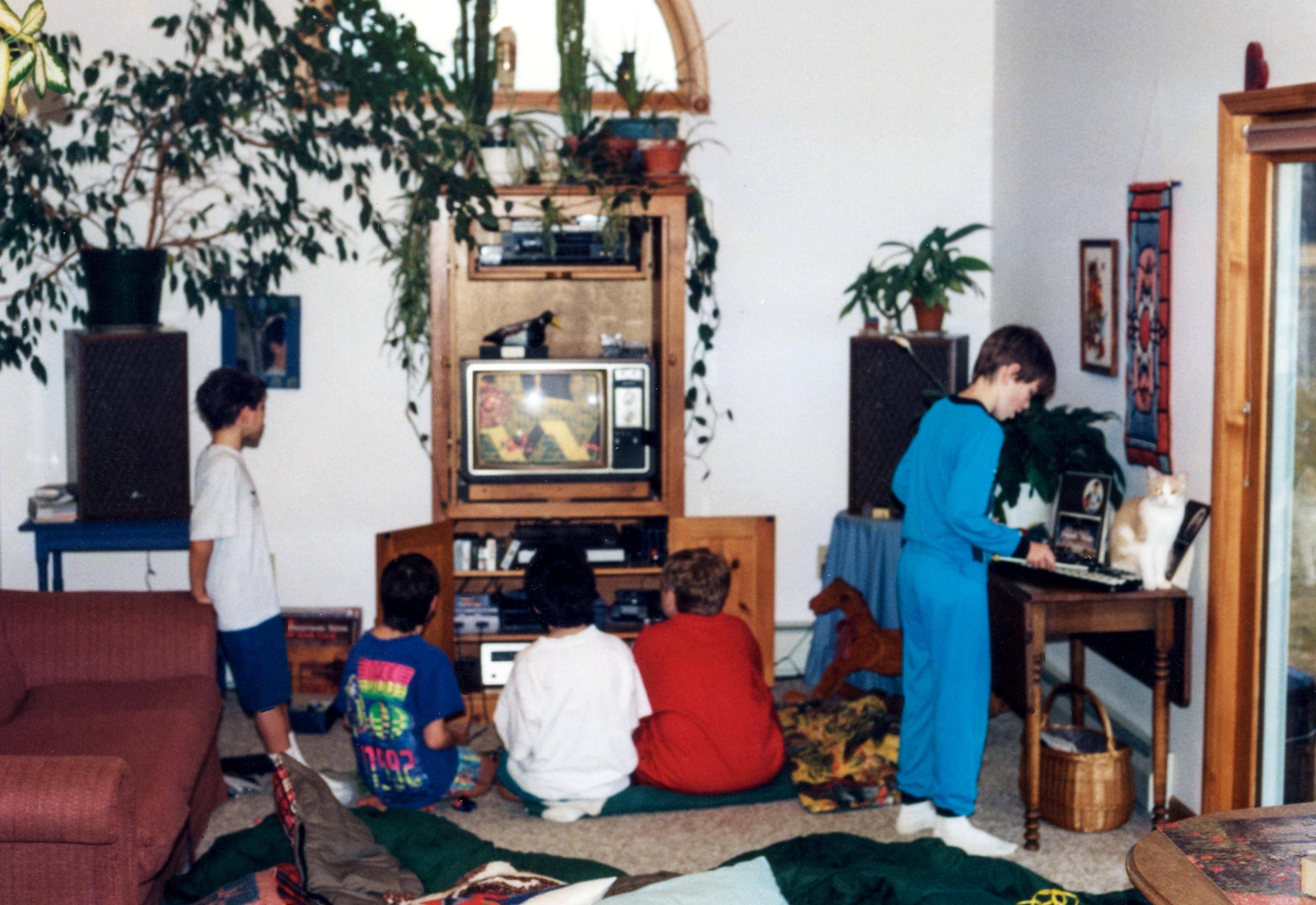
Sleepover central. Pizza rolls, Gone in 60 Seconds on TV, Loser easter eggs, spin the bottle, truth or dare.
Yard
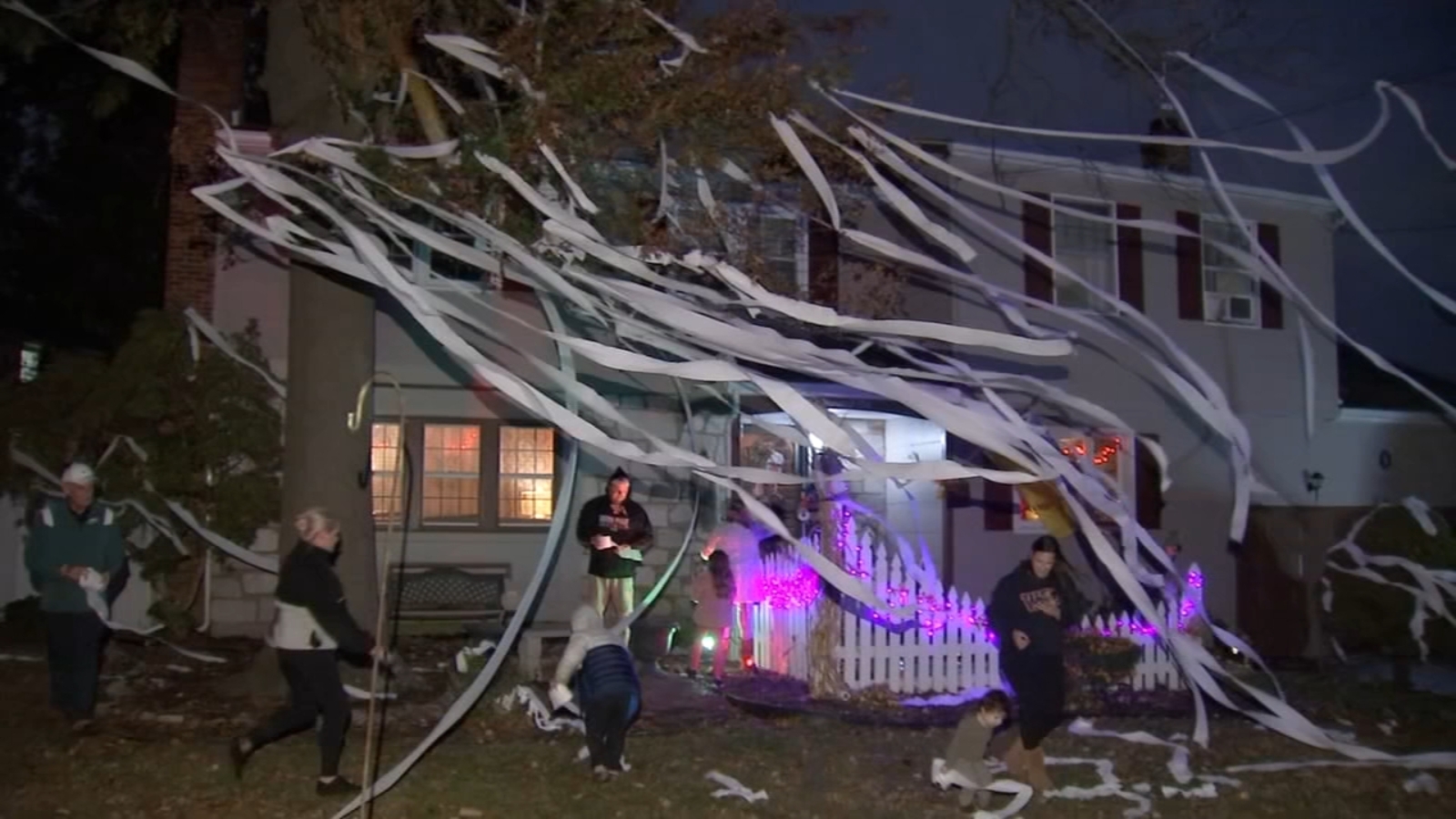
Ding dong ditch, TP gag, air-mattress exile, s'mores, the final button shot.
Performance Approach
No extras. The performance hides in the clutter.
Tight push-ins, not wide stage shots. Since there's no crowd, we shoot the band as close, cramped inserts: hands on the fretboard, a foot on a pedal, sweat, a mouth screaming the lyric, a snare hit. Slow push-ins on each player rather than a clean full-band wide.
True basement, fully dressed. Lean into the laundry, the clutter, the knick-knacks, the exposed everything. The mess is the production design. Snack wrappers and sleeping bags underfoot. It should feel like they just plugged in between dares.
Fold performance into the party. Cut the playing against the sleepover beats so it never feels like a separate stage. Basement for the loud full-band cramped bit, living room with the TV glowing behind, the bedroom for a way-too-serious floor-sitting version in pajamas. The basement set kicks off right after the gear heist (see Joe's Office): gear grabbed, scramble setup, smash into it.
Story Arc
Cozy, then weird, then anarchy, then crash. The song's swell maps to the room falling apart.
Arrival / Innocent Sleepover
Everyone shows up with sleeping bags, snacks, dumb pajamas. Bright and fun. Movies, pizza rolls, nail painting, prank calls, comics, getting overexcited.
The Night Gets Weird
Truth or Dare kicks off. Joe's bottle-shotgun gag begins. Spin the bottle, pushup contest, Ouija, scary stories, shaving cream and feathers, hand in warm water.
Full Sleepover Anarchy
Monopoly flip, slo-mo pillow fight, "parents' weed" heist, someone gets caught, everyone too loud. Exterior: ding dong ditch and TP run.
Joe Gets Exiled
Joe falls asleep or fails one dare too many. Carried outside on an air mattress in his undies. Everyone else piles into one bed. Joe wakes confused, still holding the bottle.
The Running Gags
The spine of the edit. Keep cutting back to these.
Joe can't shotgun a bottled drink
The strongest recurring bit. He never figures out it's a bottle.
- Biting the side of the bottle
- Trying to stab it with a key
- Asking someone to explain it, then misunderstanding
- Trying it upside down
- Looking up instructions in an old magazine
- Screwdriver in the garage
- Trying mid-pillow-fight and getting clobbered
- Trying outside during the TP mission
- Final failed attempt in the yard, or it just sprays everywhere.
Joe (or Tyler) is the sleepover victim
Quiet B-story: the guy everyone slowly messes with.
- Loses spin the bottle
- Gets the bad truth-or-dare
- Can't shotgun the bottle
- Shaving cream and feathers
- Hand in warm water
- Falls asleep first
- Carried out on the air mattress
- Everyone else sleeps inside without him
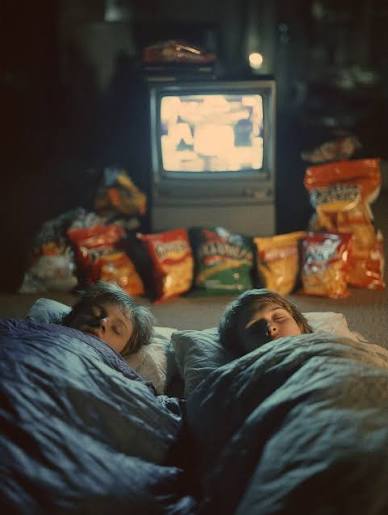
Easter-egg texture: the TV always plays era stuff like Loser and Gone in 60 Seconds. Catch the band reacting way too hard to totally random background moments.
The Dream Sequence, Poster Comes Alive
End of the bridge, into the "girl" part of the song.
The Baywatch poster sings the girl's part
At the end of the bridge we drop into an '80s/'90s-movie dream sequence. The Baywatch poster, already hanging over Hayden's bed, starts singing the girl's vocal.
Execution, on purpose cheeky: superimpose a friend's mouth over the poster and add fake camera moves (slow push-in, soft rack, dreamy parallax) to bring the flat poster to life. Lean into the cheap-VHS-dream look, soft glow, bloom, maybe a star-wipe.
Possible trigger: this is where the over-serious Ouija board "summons" her. Plant the poster in earlier shots so the payoff reads.
Reference Vibes
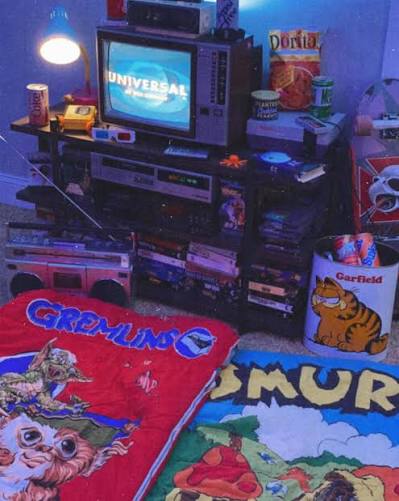
Loose visual nods, tagged to real beats. Read these through our punk-den filter, not as pastel.
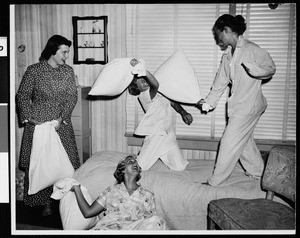
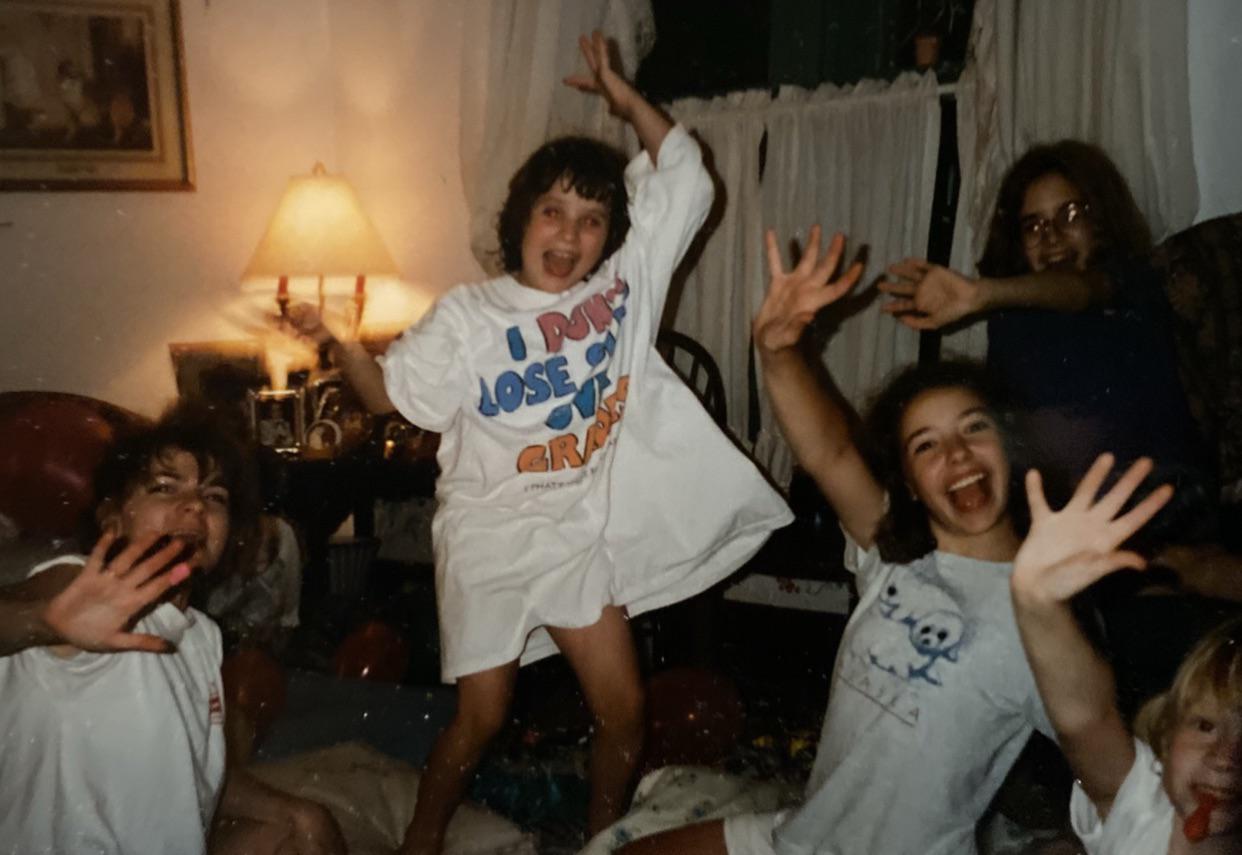
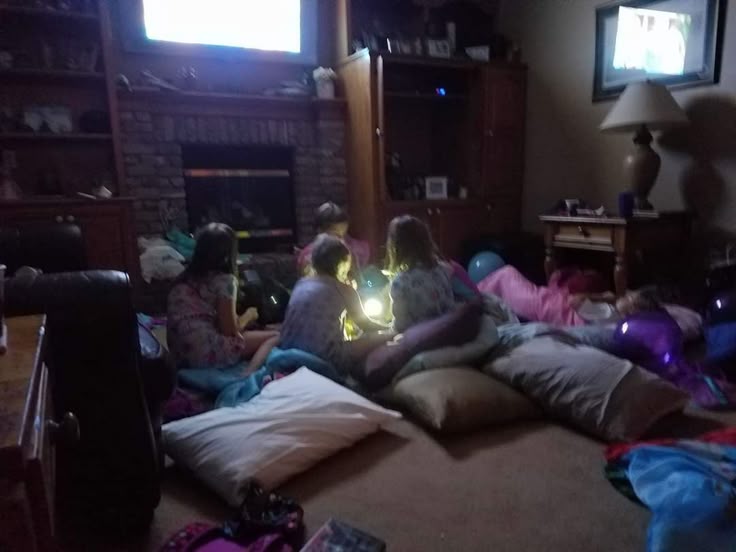
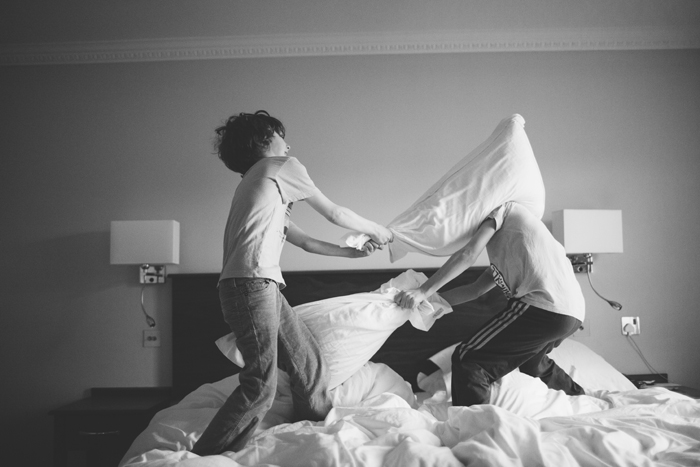
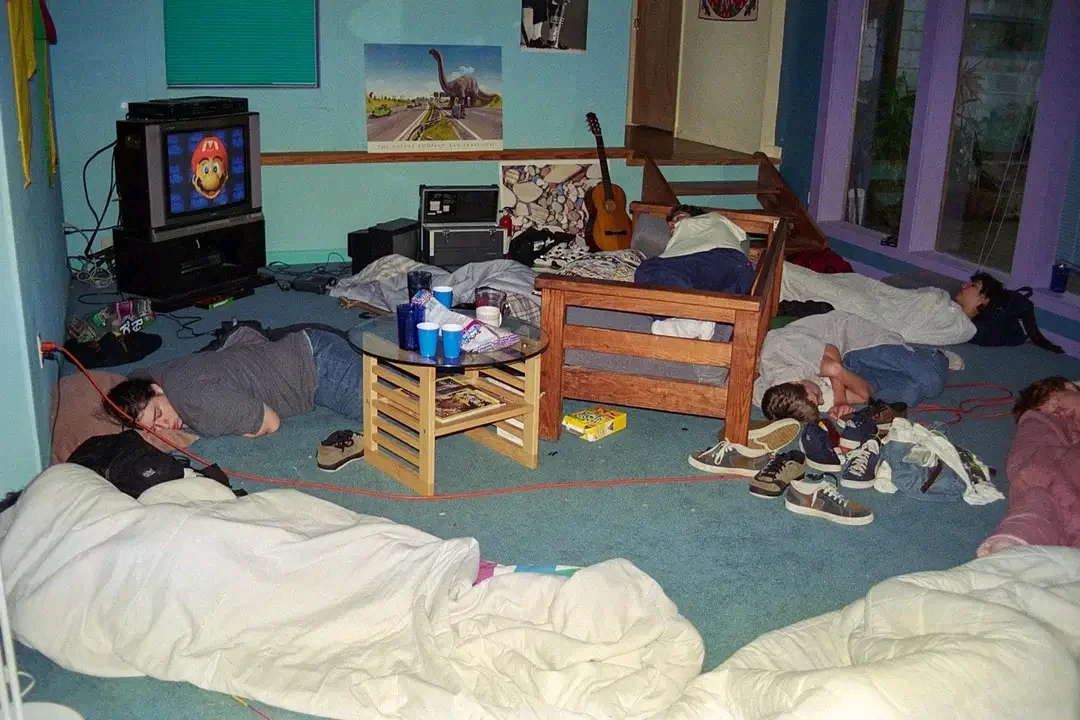
Color and Light Palette
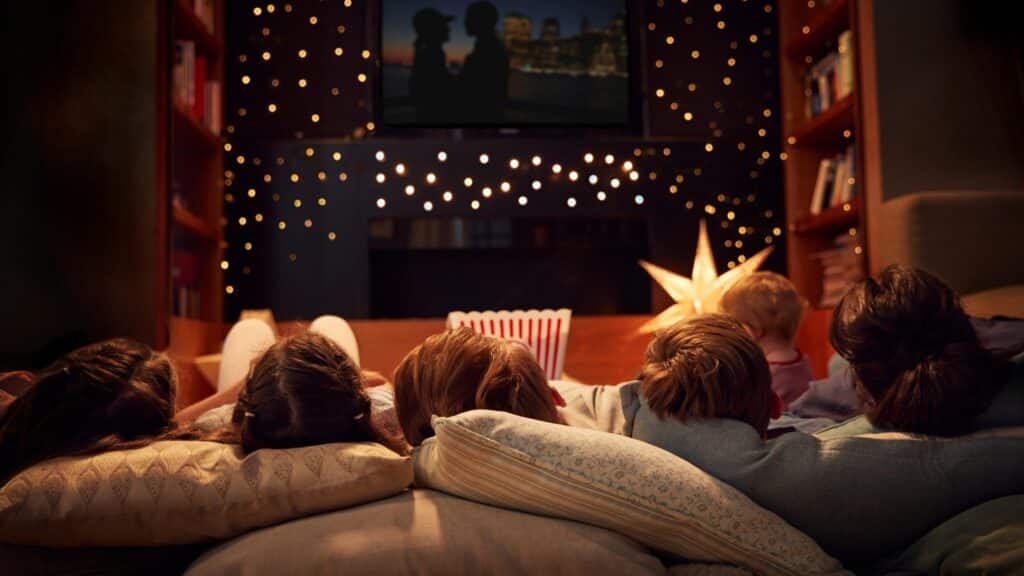
Warm tungsten and multicolor string lights against CRT cool, pulled from the real room.
Pre-Pro Notes
Department starting points. Refine on the recce.
Lighting
- Practicals carry it: tungsten lamps, the CRT, the colored Christmas string lights, gold tinsel catching light, a single flashlight for scary stories.
- On-camera flash for choruses and chaos: harsh, frozen snapshot energy.
- Warm vs. cool: amber lamp glow against TV-blue. Keep the contrast, don't flatten.
- Basement performance: cheap colored party bulbs and haze. Crash scene uses the TV as the only source.
Camera and Finish
- Handheld and loose, home-movie feel, not slick.
- Performance is tight push-ins on each player, no extras and no wide stage.
- High frame-rate for pillow fight, jumps, Monopoly flip.
- VHS grain and halation in the grade. Cut in flash "found photos."
- Dream seq: fake camera moves on the Baywatch poster, soft bloom, star-wipe.
Wardrobe
- Full pajama commitment: onesies, oversized band tees, robes, boxers, tube socks.
- Thrifted, slightly-too-small, era-correct. Nothing new or designer.
- One hero look per guy so they read instantly in the chaos.
- Sleep masks, retainers, headgear, sweatbands (pushup contest) for comedy.
- A change of clothes for Joe (shaving cream, drink mess, yard).
Props and Gags
- Sleepover: sleeping bags, lots of pillows, air mattress, flashlights, cheap nail polish, pizza rolls, bottled drinks, s'mores stuff, disposable cups.
- Gag kit: Ouija board, shaving cream, feathers, warm-water bowl, TP rolls, prop "stash" baggie, spin-the-bottle bottle, handwritten Truth-or-Dare cards.
- Joe's bottle saga: the bottled drink plus key, safety pin, screwdriver, dumb tools.
- 90s texture: already in the room: VHS and DVD, posters, vinyl, CD binders, magazines, old controllers, landline phone.
- Reset kit: towels, trash bags, gaffer tape.
Highest-Priority Shots
If the day gets short, protect these.